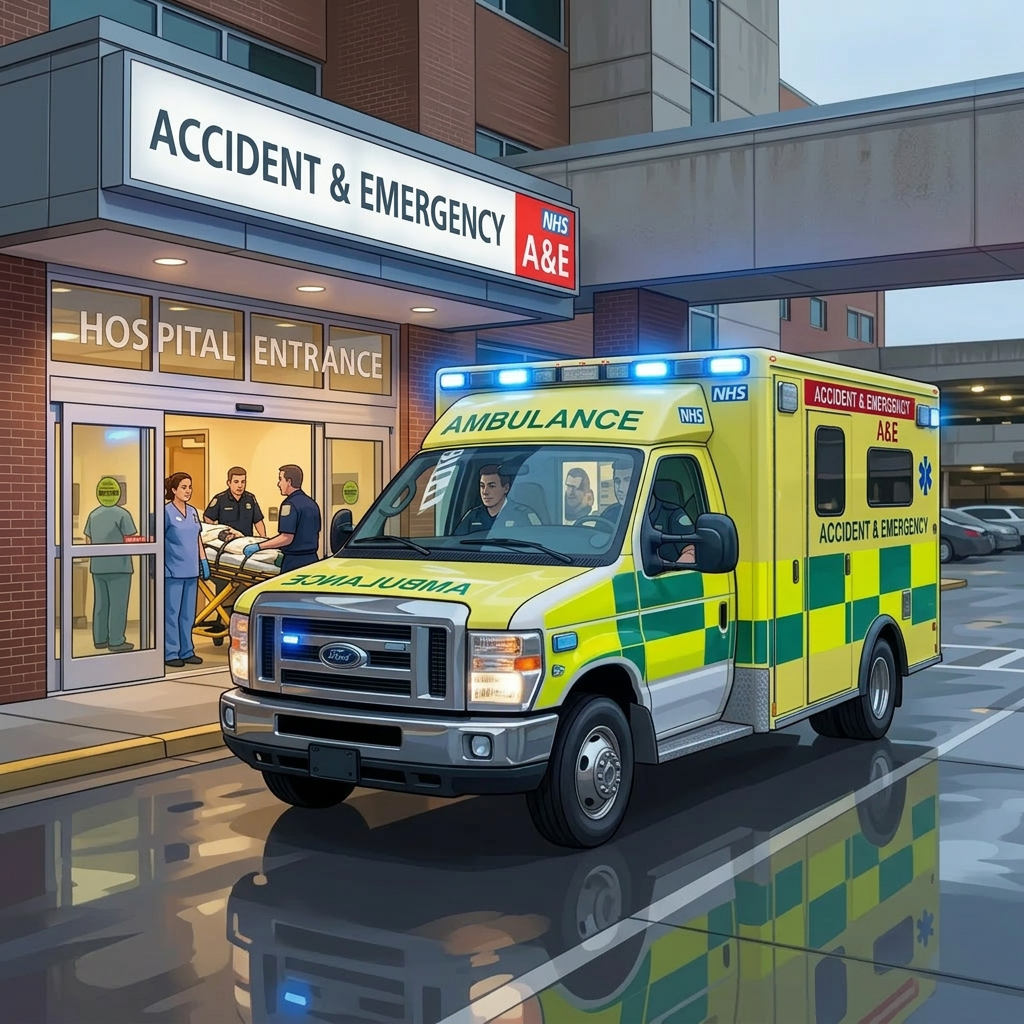
Patient-Focused Article: Understanding Emergency Department Crowding and Your Safety
This article is for general information and discussion only. It is not medical or legal advice.
Emergency departments (EDs) across England face significant pressures from overcrowding, which can affect how quickly and safely care is provided.
On 9 February 2026, NHS England published guidance on a Model Emergency Department aimed at improving urgent and emergency care pathways through better design, staffing, and processes.
The Royal College of Emergency Medicine (RCEM) welcomed aspects of this blueprint but highlighted that it is unlikely to meaningfully reduce overcrowding without wider changes to hospital beds, discharge pathways, and community support.
For women, these pressures can feel particularly challenging. Symptoms of serious conditions like heart problems or strokes may present differently in women compared to men, sometimes more subtly, which can make timely recognition harder in a busy environment.
Pregnancy or the period after birth adds further layers, where issues such as bleeding, pain, or breathlessness require prompt attention and coordination with maternity services.
Many women describe experiences of long waits in corridors or shared spaces, where privacy is limited and it can be difficult to discuss sensitive concerns like pain, gynaecological symptoms, or experiences of violence. Reduced observation in crowded settings may mean early signs of deterioration are harder to spot. National reports and patient accounts often mention feeling unheard or uncertain about who is overseeing their care during these waits.
Improvements are being discussed, including better community alternatives to hospital admission and greater attention to women’s health needs in urgent care. However, system-wide flow issues remain central. Women and their advocates may find it helpful to prepare by noting symptoms clearly, asking about escalation processes, and knowing that privacy and dignity are important standards even under pressure.
Readers with evidence, corrections or additional sources are welcome to contribute, but are asked not to send personal data.
Reflective questions for patients and advocates
- How does crowding influence trust in urgent and emergency care?
- What forms of communication during long waits support understanding and reassurance?
- How does lack of privacy affect willingness to discuss pain, bleeding or violence?
- What information about escalation processes would be helpful to see more clearly explained?
- How might the design of EDs better reflect women’s needs during time-critical illness or crisis?
Mandatory disclaimer This article is for general information and discussion only. It is not medical or legal advice, nor a substitute for professional advice. To contribute evidence, ideas, or corrections, please email womenshealthproject@outlook.com. Please do not share personal data when emailing. Individual cases cannot be reviewed. This project does not offer any form of legal service and cannot assist with complaints, claims or individual advocacy. This platform is independent and not affiliated with any law firm, regulator, inquiry or clinical body.
© 2026 Women’s Health Inquiry Project (WHIP). This article includes original analysis of material from publicly available national sources. It may not be reproduced without permission.
References
- Royal College of Emergency Medicine. NHSE’s Model ED offers a blueprint, but is unlikely to meaningfully reduce overcrowding: RCEM. Press release. 9 Feb 2026.
- National Health Executive. NHS’ Model ED is unlikely to deliver meaningful impact on overcrowding, according to RCEM.
- NHS England. The Model Emergency Department: high performing urgent and emergency care pathways. Additional sources drawn from RCEM crowding guidance and related patient safety literature on urgent care.